
Ceiling Fan Installation in Adams County, CO
Enhance indoor airflow, lower cooling bills, and ensure safe structural fan mounting.
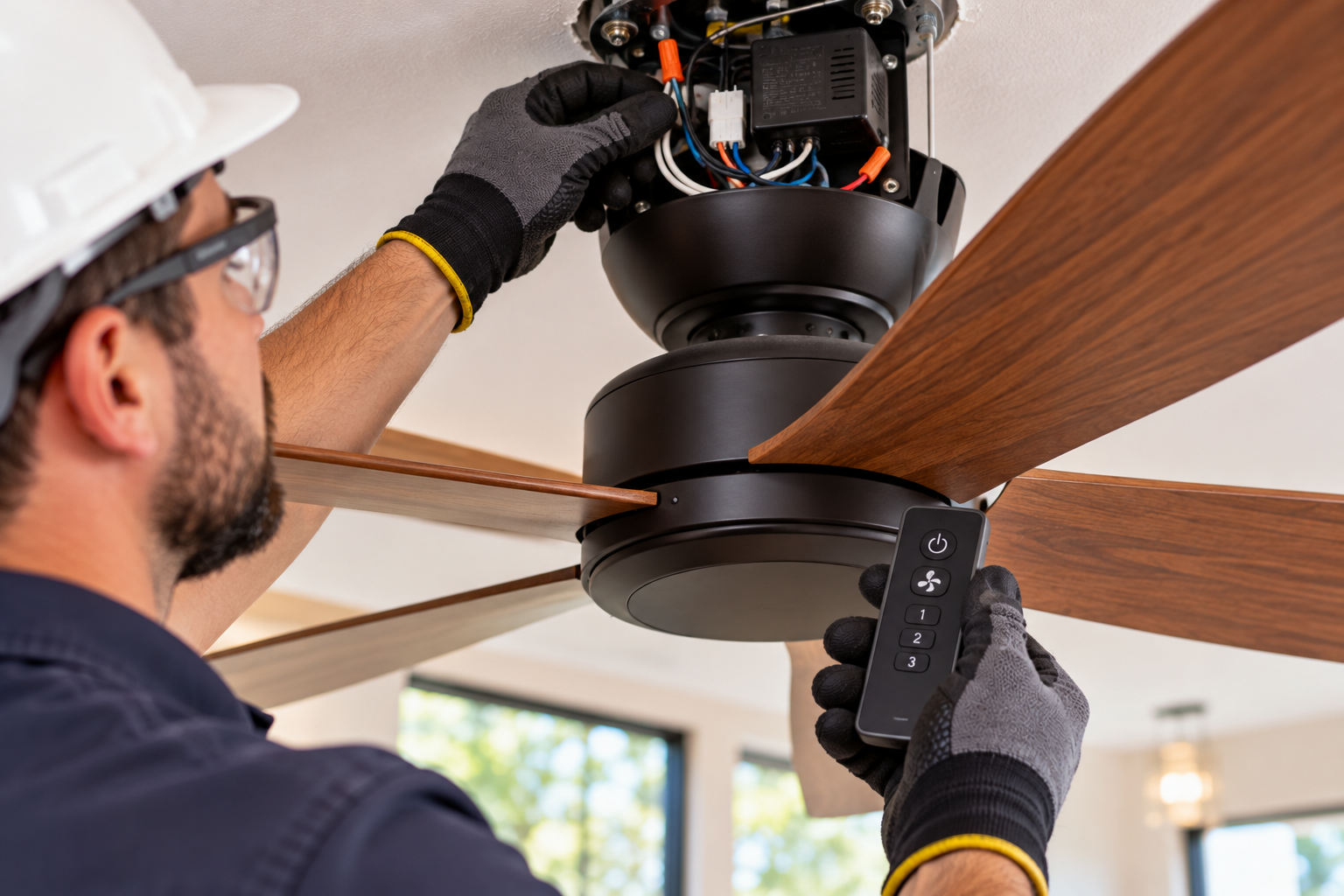
Safe, Balance-Tested Ceiling Fan Assembly & Mounting
Ceiling fans are an effective, energy-efficient way to maintain year-round comfort across the Front Range, but installing them requires far more support than a standard overhead light fixture. Because fans create continuous dynamic weight and vibration, mounting a fan to an unrated plastic or standard drywall box can cause wobbling, noisy motor operation, or structural failure. Electrical Essentials provides complete ceiling fan installation, replacement, and box reinforcement across Adams County, making sure every fan is rock-solid, quiet, and wired to code.
Our Ceiling Fan Services
How We Can Help
Fan-Rated Junction Box Installation & Retrofitting
Replace weak plastic or non-rated metal ceiling boxes with heavy-duty, steel-braced fan junction boxes anchored directly to ceiling joists.
High-Ceiling & Outdoor Covered Patio Fan Mounting
Safely assemble, extend downrods, and mount heavy indoor and damp-rated outdoor patio fans on vaulted, sloped, or high two-story ceilings.
Dual-Switch, Dimmer & Remote Receiver Wiring
Wire independent wall switches for fan speed and light kits, or install integrated handheld and smart Wi-Fi remote receivers inside canopy housings.
Why Homeowners Trust Electrical Essentials for Ceiling Fans
Secure Mounting, Smooth Operation, and Code Compliance
Master Electrician Supervision
Licensed & Insured Contractor
City & County Permit Handling
Upfront Flat-Rate Estimates
Flexible Wisetack Financing
100% Code-Compliant Work
Clean Job-Site Cleanup
Common Signs
Your Ceiling Fan Needs Repair or Replacement
The fan wobbles violently or makes loud clicking, grinding, or humming sounds on high speed.
The fan canopy or base plate is pulling away from the ceiling drywall.
The light kit flickers or cuts out when the fan blades are rotating.
The wall switch or pull chain fails to change fan speeds or turn the unit off.
You are installing a ceiling fan in a location where only a light fixture previously existed.
The fan motor smells like burning electrical insulation after running for several hours.
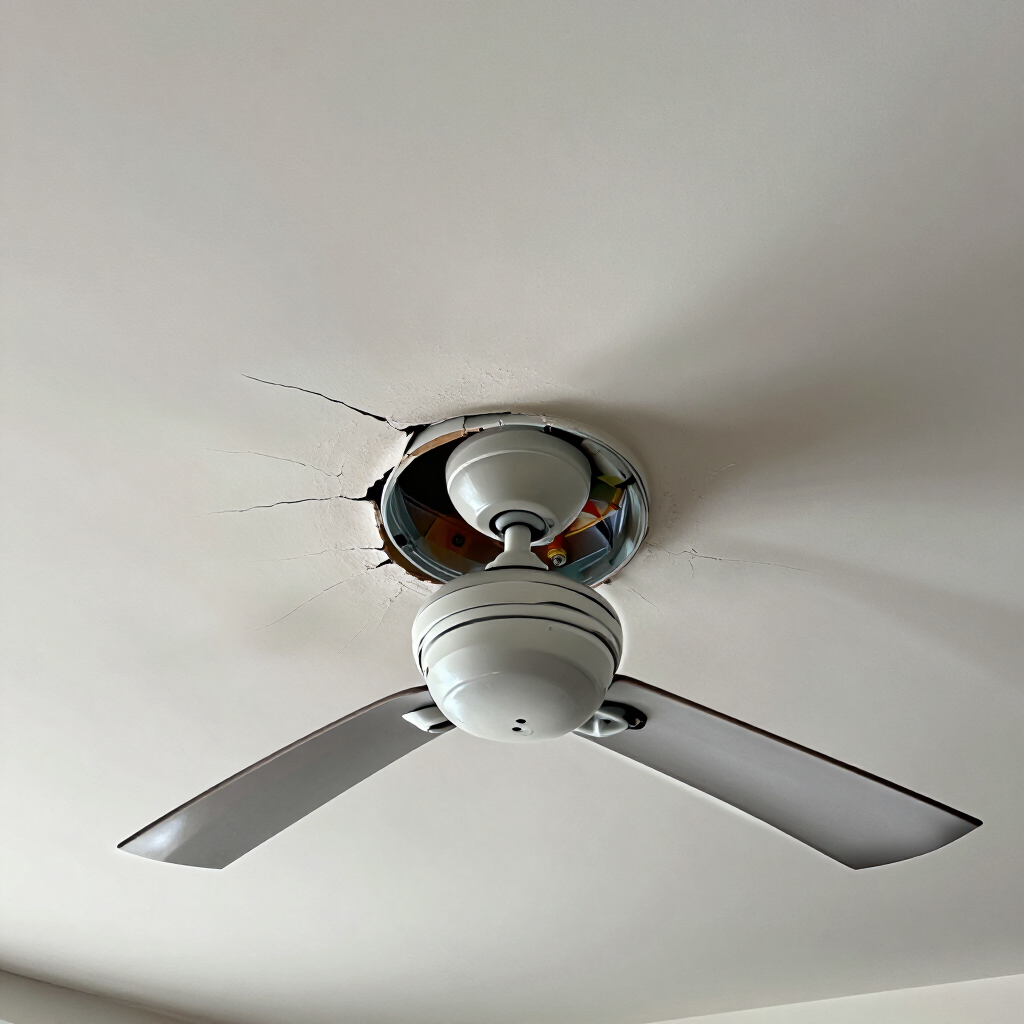
Structural Safety Risk
The Danger of Hanging a Ceiling Fan on a Light Fixture Box
Standard light fixture boxes are designed to support stationary vertical weight only—not the constant rotational force and dynamic vibration of a rotating fan. Hanging a ceiling fan on an unbraced light box causes screws to strip and drywall to fail over time, risking a falling fan that can injure occupants and tear out live ceiling wiring. Electrical Essentials installs UL-listed, fan-rated expansion braces engineered to hold up to 70 pounds safely.
SERVICE AREAS
Commerce City, CO
Brighton, CO
Thornton, CO
Northglenn, CO
Westminster, CO
Lakewood, CO
Denver, CO
Aurora, CO
Fort Collins, CO
Adams County, CO
Boulder County, CO
Weld County, CO
Ceiling Fan Installation FAQs
Can I install a ceiling fan where there is currently only a light fixture?
Yes, but the existing electrical box must be replaced with a fan-rated junction box anchored to a ceiling joist to support the fan's weight and motion safely.
How high off the floor should a ceiling fan be installed?
For optimal safety and airflow, fan blades should sit at least 7 feet above the floor, and 8 to 9 feet for ceilings higher than 8 feet using downrods.
Why does my ceiling fan wobble on high speed?
Wobbling is caused by unbalanced blades, loose blade bracket screws, bent blade irons, or an unanchored ceiling junction box.
Do ceiling fans help cut heating bills in the winter?
Yes, reversing the fan motor to rotate clockwise at low speed pulls cool air upward and forces warm air trapped near the ceiling down into living spaces.
How long does it take to assemble and install a new ceiling fan?
Replacing an existing fan takes about 1 to 1.5 hours, while new location installs requiring box bracing and wire running take 2 to 3 hours.
Can any ceiling fan be installed on a covered outdoor patio?
No, outdoor fans must be UL damp-rated or wet-rated to withstand ambient outdoor humidity and prevent short-circuiting or rust.